How Much Sleep Do You Need? Find Your Personal Sleep Number
How much sleep do you need? If you search online, you’ll find the same answer everywhere: adults need 7-9 hours. But that three-hour range represents millions of different people with different bodies, schedules, and lives. Where do YOU fall on that spectrum?
More importantly, why does the same 7 hours leave some people energized while others struggle to maintain alertness and focus? And how can you tell if you’re genuinely getting enough sleep, or if you’ve just adapted to functioning on less? Understanding why sleep is so important helps explain why finding your personal sleep number matters for health and performance.
The question “how much sleep do I need” has no universal answer because sleep requirements vary based on age, genetics, lifestyle, and individual biology. Here’s how to determine your actual sleep need, understand why it varies, and recognize when you’re falling short even if you think you’ve adjusted.
Why There’s No Single Answer
Sleep need varies between people for biological reasons that go far beyond willpower or habit. These differences show up in three main areas:
Genetics play a role. A small percentage of people carry specific gene variants (particularly in the DEC2 and ADRB1 genes) that allow them to function well on 6 hours or less. These genuine “short sleepers” maintain normal health markers and cognitive performance on less sleep than average. They’re rare. Most people who claim to need only 6 hours are actually functioning below their optimal capacity.
Age determines baseline need. Sleep requirements decrease gradually from infancy through adulthood, then stabilize. The changes reflect shifting demands for growth, development, and cellular maintenance rather than reduced importance of sleep itself.
Individual factors create variation. Activity level, health status, stress, and even how efficiently you sleep all influence how many hours you need. Two people of the same age can have legitimately different requirements.
The 7-9 hour range for adults represents where most people cluster. Your personal number lives somewhere within (or occasionally outside) that range. The key is finding it through function rather than guessing based on what seems reasonable.
How Much Sleep Do You Need By Age?
Sleep requirements change substantially across the lifespan. While individual variation exists at every age, these ranges represent where most healthy people fall:
Newborns (0-3 months): 14-17 hours per day Newborns don’t yet differentiate between day and night. Their sleep is distributed across the 24-hour period in short bursts, gradually consolidating as their circadian rhythm develops.
Infants (4-11 months): 12-15 hours per day As the circadian system matures, nighttime sleep lengthens. Daytime naps remain essential for meeting total sleep needs.
Toddlers (1-2 years): 11-14 hours per day Most toddlers take one or two daytime naps totaling 2-3 hours, with the remainder at night. Individual variation is wide.
Preschoolers (3-5 years): 10-13 hours per day Many children this age still nap once daily. By age 5, most have transitioned to nighttime-only sleep.
School-age children (6-13 years): 9-11 hours per night Sleep becomes fully consolidated at night. Growth and learning demands keep requirements high compared to adults.
Teenagers (14-17 years): 8-10 hours per night Biological shifts during puberty delay circadian timing by 2-3 hours, making early school starts genuinely difficult. Sleep need remains high due to continued development.
Young adults (18-25 years): 7-9 hours per night Sleep needs stabilize in this range for most people, though individual variation persists.
Adults (26-64 years): 7-9 hours per night The same range applies throughout most of adulthood. Claims that older adults “need less sleep” are misleading. While sleep often becomes lighter and more fragmented with age, the actual amount needed stays fairly constant.
Older adults (65+ years): 7-8 hours per night Sleep architecture changes with age, becoming lighter and more easily disrupted. The total amount needed may decrease slightly, but most older adults still require at least 7 hours.
These are guidelines, not prescriptions. A 40-year-old who functions optimally on 7.5 hours shouldn’t force themselves to sleep 9 hours because it falls within range. Conversely, someone consistently sleeping 6.5 hours and struggling with afternoon fatigue likely needs more, regardless of whether they’ve “gotten used to it.”
Sleep Opportunity vs Actual Sleep: A Critical Distinction
Many people confuse time in bed with time asleep. This distinction matters because you can spend 8 hours in bed but only sleep 6.5 hours, leaving you short despite what seems like adequate opportunity.
Sleep opportunity is the time you allocate for sleep. If you get into bed at 10:30pm and set your alarm for 6:30am, you’ve given yourself 8 hours of sleep opportunity.
Actual sleep is the time you spend truly asleep. This excludes:
- Time spent falling asleep (sleep latency)
- Brief awakenings during the night
- Time awake before getting out of bed in the morning
For most healthy sleepers, the difference is 20-40 minutes. If it takes you 15 minutes to fall asleep and you wake briefly twice during the night for a total of 10 minutes, your 8-hour opportunity yields about 7.5 hours of actual sleep.
This gap widens with:
- Insomnia or difficulty falling asleep
- Frequent nighttime awakenings
- Sleep disorders like sleep apnea (which fragments sleep without your awareness)
- Poor sleep environment (noise, temperature, light)
The practical implication: if you need 8 hours of sleep, you should allocate 8.5 hours of sleep opportunity to account for normal settling time and brief awakenings. People who set aside exactly 8 hours often end up with only 7-7.5 hours of actual sleep.
Understanding Sleep Debt
Sleep debt is the cumulative difference between the sleep you need and the sleep you get. It builds when you consistently sleep less than your requirement, even by small amounts. This happens because sleep pressure builds through adenosine accumulation, and insufficient sleep prevents complete clearance.
How it accumulates: If you need 8 hours but sleep 7 hours for five nights, you’ve accumulated 5 hours of sleep debt. This debt compounds like financial debt, with mounting consequences for cognitive performance, mood, and health.
Why it feels deceptive: People often report “adapting” to short sleep after a few weeks. Studies show this is an illusion. Subjective sleepiness may stabilize, but objective measures of reaction time, attention, and decision-making continue declining. You stop noticing how impaired you are, which makes sleep debt particularly dangerous for tasks requiring alertness like driving.
The weekend catch-up myth: Many people try to repay sleep debt by sleeping in on weekends. This provides some recovery, but research in chronobiology shows significant limitations:
- Weekend catch-up doesn’t fully restore cognitive performance
- It doesn’t reverse metabolic changes, including disruptions to ghrelin (the hunger hormone) and leptin (the satiety hormone), both of which remain altered even after extended sleep
- Large swings between weekday and weekend sleep create “social jet lag,” making both periods feel less efficient
- Memory consolidation suffers when sleep loss occurs on learning days, even if you sleep more later
A better approach involves gradually increasing nightly sleep by 15-30 minutes until you reach your natural need, then maintaining consistency. This takes longer but provides genuine recovery.
Sleep Quality Matters as Much as Quantity
Time in bed means little if that time doesn’t include sufficient deep sleep and REM sleep. Quality depends on:
Continuity: Fragmented sleep, even if total hours are adequate, provides less restoration than continuous sleep. Each interruption resets your progress through sleep cycles.
Architecture: You need full cycles of light sleep, deep sleep, and REM. Missing the first two hours (rich in deep sleep) or the last two hours (rich in REM) leaves you less restored even if you hit your hour target.
Timing: Sleeping from 2am to 10am feels different from 10pm to 6am because your circadian rhythm and sleep pressure interact. The 10pm start aligns better with your body’s natural melatonin release and temperature drop.
Environment: Noise, temperature fluctuations, light, and inadequate bedding all fragment sleep without necessarily waking you fully. You may report “sleeping through the night” while your brain spent more time in light sleep stages. Specific issues include poor thermal regulation (inability to dissipate body heat effectively) and inadequate spinal alignment, both of which prevent progression into deeper sleep stages.
If you’re getting 8 hours but still feel unrested, quality is likely the issue. Common sleep problems like sleep apnea, restless legs, or chronic insomnia fragment rest even when time in bed is adequate.
How to Determine YOUR Personal Sleep Need
Most sleep guidance provides general ranges without offering a systematic method for finding your specific requirement. Here’s a more precise approach based on how you actually function:
The Vacation Method (Most Accurate)
This approach comes from sleep researchers and provides the clearest picture of your natural sleep need:
When: During a 2-week period when you’re not under time pressure (holiday, vacation, sabbatical)
How:
- Go to bed when you feel genuinely tired, not because it’s a certain time
- Sleep without an alarm, waking naturally
- Avoid alcohol and minimize caffeine (especially after lunch)
- Keep your sleep schedule relatively consistent (within 1-2 hours)
- Track your sleep times for the second week only (the first week may involve recovery from accumulated sleep debt)
Calculate: Average your total sleep time across 5-7 consecutive days in week two. This is your natural sleep need.
Why it works: Without external pressure, your body gravitates toward its optimal sleep duration. The two-week window allows you to clear any existing sleep debt first, then settle into your true baseline.
Function-Based Assessment (Everyday Method)
If you can’t take two weeks to experiment, assess your current sleep by how you function:
Signs you’re getting enough sleep:
- You wake naturally around your alarm time (or shortly before) feeling refreshed
- You feel alert within 15-30 minutes of waking
- You maintain steady energy throughout the day without caffeine after morning
- You don’t need weekend lie-ins to feel functional
- Concentration and mood remain stable in the afternoon
- You fall asleep within 15-30 minutes when you go to bed
Signs you’re not getting enough:
- You sleep through your alarm or hit snooze repeatedly
- You feel groggy or foggy for the first hour after waking
- You need multiple cups of coffee to feel alert
- You experience strong sleepiness in mid-afternoon
- You fall asleep within 5 minutes of going to bed (suggests accumulated sleep debt rather than healthy sleep onset)
- You sleep 1-2 hours longer on weekends than weekdays
- Small frustrations feel overwhelming by late afternoon
If you’re showing multiple “not enough” signs despite allocating 7-8 hours, you likely need to increase your sleep opportunity or improve your sleep quality. Conversely, if you’re waking before your alarm feeling genuinely refreshed after 7 hours, that’s probably sufficient for you.
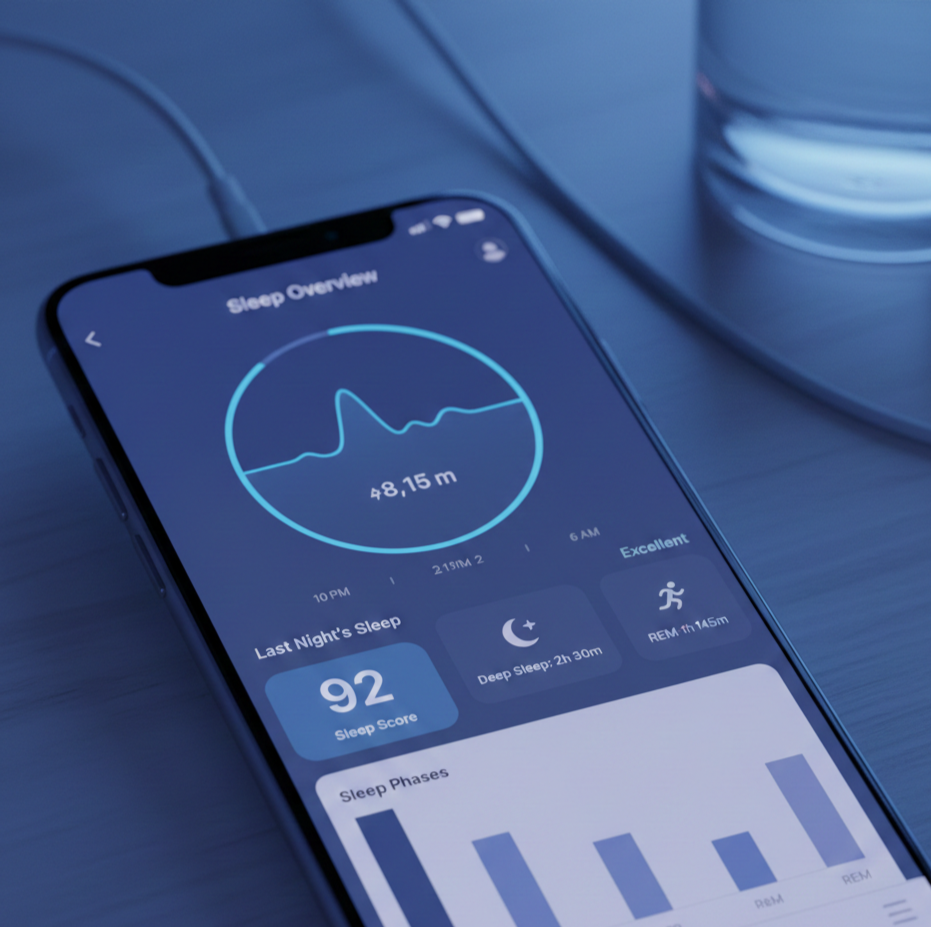
While this function-based approach works well for most people, objective tracking tools (such as sleep-tracking wearables) can validate these subjective assessments by measuring actual sleep duration, sleep stages, and nighttime disruptions. These devices help distinguish between feeling adapted to insufficient sleep and genuinely meeting your needs.
Frequently Asked Questions
How much sleep do adults need?
Most adults need 7-9 hours of sleep per night. The exact amount within that range varies individually based on genetics, activity level, health status, and how efficiently you sleep. Function matters more than hitting a specific number: if you wake refreshed, maintain steady energy, and don’t rely on weekend catch-up sleep, you’re likely getting enough.
Is 6 hours of sleep enough?
For most people, no. While a small percentage of the population carries genetic variants allowing them to function well on 6 hours, they’re rare. Most people sleeping 6 hours show measurable impairments in reaction time, attention, and decision-making even if they don’t feel sleepy. If you consistently sleep 6 hours and show signs of sleep debt (afternoon crashes, weekend catch-up needs, heavy caffeine use), you need more.
Can you catch up on sleep on the weekends?
Only partially. Weekend lie-ins help reduce subjective sleepiness and provide some cognitive recovery, but they don’t fully reverse the metabolic and hormonal changes caused by weekday sleep restriction. They also create “social jet lag” by shifting your circadian rhythm later, making Monday morning feel worse. Consistent nightly sleep works better than dramatic weekday-weekend swings.
Do sleep needs change as you get older?
Yes, but not as dramatically as commonly believed. Sleep need decreases from infancy through young adulthood, then stabilizes around 7-9 hours for most adults. Older adults often experience lighter, more fragmented sleep, but they typically still need 7-8 hours. The change is more about sleep quality and efficiency than total amount needed.
How do I know if I’m getting enough sleep?
Judge by daytime function rather than hours alone. Signs you’re getting enough include: waking naturally near your alarm time, feeling alert within 30 minutes of waking, maintaining steady energy without relying on caffeine or naps, and not needing weekend catch-up sleep. If you hit snooze repeatedly, depend on coffee to function, or crash in the afternoon, you likely need more sleep.
Finding Your Sleep Sweet Spot
How much sleep do you need? The answer is personal, but it’s measurable. Use the vacation method if possible, or assess your function honestly if not. Track how you feel at different sleep durations, adjust in 15-30 minute increments, and give each change at least a week before judging.
Remember that sleep opportunity must exceed your sleep need by 20-40 minutes to account for falling asleep and brief awakenings. If you need 8 hours of actual sleep, allocate 8.5 hours in bed.
Quality matters as much as quantity. If you’re hitting your hour target but still feeling unrested, examine your sleep environment, evening routine, and whether conditions like sleep apnea might be fragmenting your rest.
Your sleep need represents a biological requirement as real as your need for food or water. Understanding and protecting that requirement is one of the most effective investments you can make in your health, performance, and wellbeing.