How Sleep Works: Understanding Your Circadian Rhythm and Sleep Pressure
How does sleep work? You feel wide awake at 3pm, but by 10pm you can barely keep your eyes open. Then, frustratingly, you’re wide awake again at 2am staring at the ceiling. Other nights you fall asleep instantly and wake up refreshed. What’s controlling this seemingly random system?
The answer involves two separate biological mechanisms working together. When they align, sleep feels effortless and restorative. When they clash, you get those nights where you’re exhausted but unable to sleep, or mornings where eight hours in bed still leaves you foggy.
Understanding how these systems work shows why sleep is so important for health and performance and explains why you can’t just “decide” to sleep better through willpower alone. It also reveals the specific levers you can actually pull to improve your sleep.
Here’s how your body determines when you sleep, how deeply you sleep, and why some nights work better than others.
The Two Systems That Control Your Sleep
Sleep operates through two independent but interconnected systems. One tells your body what time of day it is. The other tracks how long you’ve been awake. Together they create the perfect window for sleep.
System 1: Your Circadian Rhythm (Your Internal Clock)
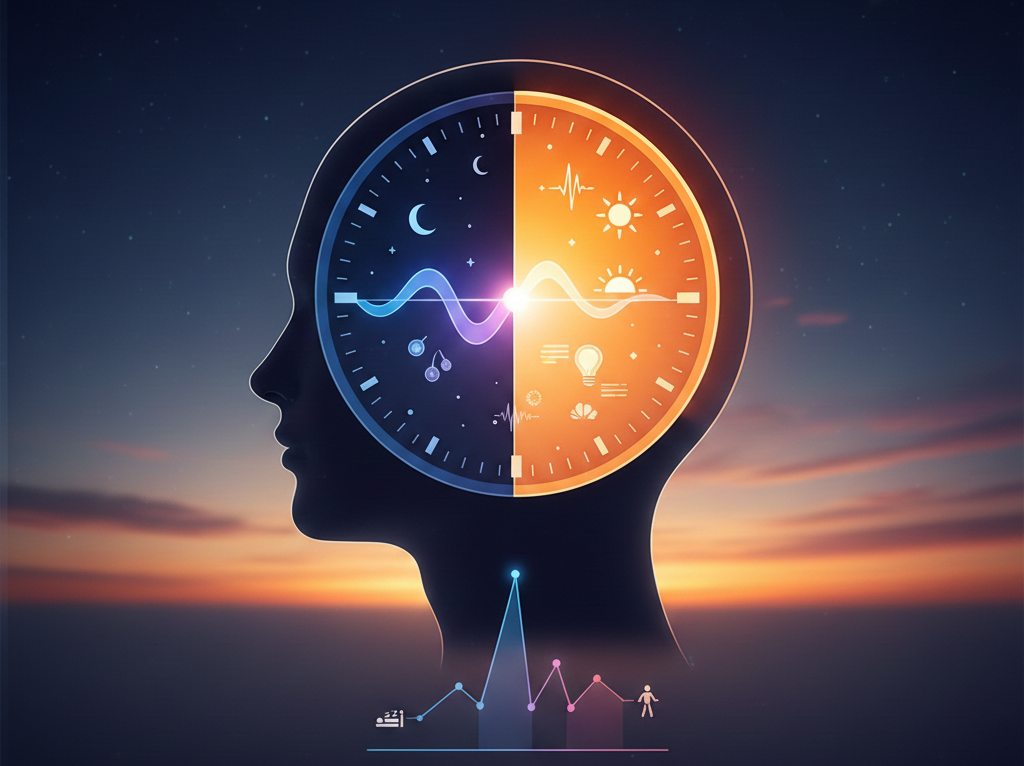
Your circadian rhythm functions as your body’s master timekeeper. This roughly 24-hour internal clock runs constantly, signaling to every organ and tissue when to be active and when to rest.
The rhythm operates through a cluster of brain cells called the suprachiasmatic nucleus, located just behind your eyes. This “master clock” coordinates thousands of smaller clocks throughout your body, each controlling different processes like hormone release, body temperature, and digestive function.
What sets your circadian rhythm:
- Light is the primary signal (especially morning sunlight). Since light is the primary circadian signal, optimizing your sleep environment for proper light exposure is critical.
- Food timing provides secondary cues
- Exercise patterns reinforce the schedule
- Social routines add weaker but consistent signals
Throughout the day, your circadian rhythm orchestrates a predictable sequence of changes:
Morning: Cortisol rises sharply, preparing your body for activity. Core body temperature begins climbing, supporting alertness and physical performance.
Afternoon: Temperature peaks, providing maximum alertness and coordination. This is why most people perform best on cognitive and physical tasks between 2pm and 6pm.
Evening: Melatonin begins releasing as darkness falls, signaling that it’s time to wind down. Core temperature starts dropping, making it easier to fall asleep.
Night: Temperature reaches its lowest point around 4-5am. Melatonin stays elevated, maintaining sleep depth.
This 24-hour pattern explains why you feel naturally alert at certain times regardless of how much sleep you got. It also explains jet lag: your internal clock still expects your home schedule even when you’re in a different time zone.
System 2: Sleep Pressure (The Build-Up of Adenosine)
While your circadian rhythm tracks time of day, sleep pressure tracks time awake. The longer you stay conscious, the stronger your drive to sleep becomes.
This process works through a chemical called adenosine. As your brain burns energy throughout the day, it produces adenosine as a metabolic byproduct. Adenosine gradually accumulates in your brain, attaching to specific receptors and creating an increasingly heavy sensation of sleepiness.
Think of adenosine like a slowly filling bucket. Every hour you’re awake adds more. Eventually the pressure becomes overwhelming and you find yourself nodding off, even if you’re trying to stay alert. Sleep pressure builds based on time awake, which is why how much sleep you need depends on clearing this accumulation.
When you finally sleep, adenosine gets cleared away. This is why you wake feeling refreshed after a good night. The bucket has been emptied.
How caffeine interferes: Caffeine molecules are shaped similarly to adenosine. They fit into the same receptors, blocking adenosine from attaching. This stops the drowsy signal from reaching your brain. However, caffeine doesn’t remove the adenosine itself. When caffeine wears off, all that accumulated adenosine floods in at once, causing the familiar “caffeine crash.”
When The Two Systems Work Together (And When They Don’t)
Perfect alignment happens at night: Your circadian rhythm releases melatonin and drops your temperature (signaling rest time), while adenosine has built up throughout the day (creating strong sleep pressure). Both systems point toward sleep. You fall asleep easily and stay asleep deeply.
Perfect alignment happens in the morning: Melatonin drops, temperature rises, cortisol peaks (circadian signals for wakefulness), and adenosine has been cleared during sleep (removing sleep pressure). You wake naturally and feel alert.
Misalignment creates problems:
Evening nap misalignment: You nap at 7pm, clearing adenosine. Now your circadian rhythm says “sleep” but adenosine is low, so sleep pressure is weak. You lie awake in bed unable to fall asleep.
Late-night caffeine misalignment: You drink coffee at 9pm and stay under bright lights. Your circadian rhythm still expects sleep (melatonin is trying to release), but caffeine blocks adenosine and light suppresses melatonin. Your energy feels unstable and jittery. Your reactions slow even though you don’t feel sleepy.
Shift work misalignment: You try to sleep at 9am after a night shift. Adenosine is high (you’ve been awake all night), but your circadian rhythm screams “wake up” with rising cortisol and climbing temperature. Sleep feels light and fragmented.
These two forces operate continuously. Neither can be ignored or overridden through willpower. The key to better sleep involves working with both systems rather than fighting them.
Sleep Cycles: The Architecture of Your Night
How does sleep work once you’re actually unconscious? Falling asleep doesn’t simply switch off your brain. Instead, your brain and body move through a repeating sequence of distinct stages. This pattern is called sleep architecture.
Each complete cycle lasts roughly 90 minutes. In a typical night, you pass through four to six cycles. The composition of each cycle shifts as the night progresses, which explains why the first half of your night feels different from the second half.
The Three Stages of Sleep
Sleep researchers divide sleep into two broad categories: non-REM sleep and REM sleep. Non-REM breaks down further into light sleep and deep sleep.
Light Sleep: The Bridge Between Wakefulness and Deep Rest
Light sleep comprises about half of your total sleep time. You enter this stage first as your body transitions from wakefulness.
What happens:
- Muscles relax progressively
- Breathing becomes regular and steady
- Brain activity slows but remains relatively active
- You can still wake easily from sounds or touch
Light sleep functions primarily as a transitional state. It provides entry into the deeper, more restorative stages. It also filters sensory input, determining what sounds or sensations should wake you versus what can be ignored.
Light sleep alone doesn’t provide much restoration. This explains why sleeping in an environment with frequent disturbances (noise, movement, temperature changes) leaves you feeling unrested even with adequate total hours.
Deep Sleep: Physical Restoration and Repair
Deep sleep represents the most physically restorative stage. Brain activity slows to long, rolling waves (called slow-wave sleep), and you become very difficult to wake.
What happens during deep sleep:
- Growth hormone releases in pulses, supporting tissue repair and muscle building
- Immune system strengthens, producing infection-fighting cells
- Brain clears metabolic waste products (including proteins linked to Alzheimer’s disease)
- Blood pressure drops significantly, giving cardiovascular system recovery time
- Glucose metabolism stabilizes
Even a short period of deep sleep can leave you feeling substantially refreshed. Missing it causes heavy fatigue and physical sluggishness that persists regardless of total time in bed.
Timing matters critically: Deep sleep concentrates in the first half of the night, particularly in cycles 1-3. Going to bed too late cuts into this window, reducing deep sleep even if you sleep in later. This explains why early nights often feel more restorative than late nights of equal length.
REM Sleep: Mental Processing and Emotional Regulation
REM stands for Rapid Eye Movement, reflecting the characteristic darting movements of your eyes beneath closed lids during this stage.
Brain activity during REM resembles waking consciousness more than deep sleep. However, your body remains still through temporary muscle paralysis (which prevents you from physically acting out dreams).
What happens during REM:
- Vivid dreams occur (though dreaming can happen in other stages too)
- Brain strengthens neural connections, consolidating memories
- Emotional experiences get processed and integrated
- Creative problem-solving occurs through associative thinking
- Stress responses get recalibrated
Lack of REM makes focus more difficult and mood less stable, even when deep sleep was adequate. REM concentrates in the later cycles of the night, particularly after 4-5am. Waking too early (whether by alarm or disturbance) often means losing the majority of your REM sleep.
How Sleep Cycles Progress Through the Night
Early night (Cycles 1-2):
- Rich in deep sleep (40-50% of cycle time)
- Brief REM periods (5-10 minutes)
- Focus: physical restoration
Middle night (Cycles 3-4):
- Moderate deep sleep (20-30% of cycle time)
- Longer REM periods (15-20 minutes)
- Balance between physical and mental restoration
Late night (Cycles 5-6):
- Minimal deep sleep (10% or less)
- Extended REM periods (25-40 minutes)
- Focus: memory consolidation and emotional processing
This changing composition explains several common sleep experiences:
Why 6 hours feels so much worse than 8: You’re not just missing 2 hours of sleep. You’re missing cycles 5-6, which contain most of your REM. You get adequate physical restoration but miss critical mental and emotional processing.
Why sleeping in doesn’t always help: If you went to bed late, you missed cycles 1-2 with their concentrated deep sleep. Sleeping later gives you more REM but can’t replace the deep sleep window you missed.
Why interrupted sleep feels terrible: Each interruption can reset your cycle back to light sleep, preventing progression into deep and REM stages. Eight hours with frequent awakenings provides far less restoration than six hours of continuous sleep.
Individual Differences in Sleep Systems
The mechanisms described above work fundamentally the same way in everyone, but the timing and sensitivity vary significantly between people.
Caffeine metabolism varies dramatically. Some people clear caffeine in 3-4 hours; others take 8-10 hours. This genetic variation explains why your colleague can drink espresso at 8pm and sleep fine while you’re wired from afternoon tea.
Adenosine accumulation rates also differ. Some people build sleep pressure quickly and struggle to stay awake past 9pm, while others can go 16-18 hours without significant drowsiness. Light sensitivity varies too: some people’s circadian rhythms shift dramatically from modest evening light exposure, while others need intense, prolonged light to see effects.
Sleep architecture also changes with age. Teenagers experience natural delays in their circadian timing, making early school starts genuinely difficult. Older adults typically experience lighter, more fragmented sleep with more frequent awakenings, even with good sleep habits.
These variations explain why generic sleep advice works brilliantly for some people and fails for others. Understanding your own patterns (which we’ll cover in future articles) helps you customize approaches rather than fighting your biology.
Frequently Asked Questions About How Sleep Works
How does the circadian rhythm affect sleep?
Your circadian rhythm determines when your body naturally wants to sleep and wake. It controls the timing of melatonin release (which makes you drowsy), core body temperature (which needs to drop for sleep to begin), and cortisol release (which promotes waking). When you try to sleep outside your circadian window, sleep feels difficult and fragmented because your body is receiving wake signals instead of rest signals. This is why jet lag and shift work cause such significant sleep problems.
What is sleep pressure and how does it build?
Sleep pressure refers to the biological drive to sleep that builds throughout your waking hours. It works through adenosine, a chemical byproduct that accumulates in your brain as you burn energy. The longer you stay awake, the more adenosine builds up, creating an increasingly strong urge to sleep. Sleep clears adenosine away, which is why you wake feeling refreshed. Caffeine temporarily masks sleep pressure by blocking adenosine receptors, but it doesn’t remove the adenosine itself.
Why do I feel tired but can’t fall asleep?
This happens when your two sleep systems misalign. You feel tired because adenosine (sleep pressure) is high, but you can’t fall asleep because your circadian rhythm hasn’t yet signaled rest time. Common causes include: napping too late (which reduced adenosine), using bright screens before bed (which suppresses melatonin), or trying to sleep too early relative to your natural chronotype. The solution involves aligning both systems through consistent timing and proper light exposure.
What are sleep cycles and why do they matter?
Sleep cycles are the 90-minute patterns your brain follows throughout the night, moving through light sleep, deep sleep, and REM sleep. Each stage serves different functions: deep sleep handles physical restoration, REM handles mental processing and emotional regulation, and light sleep provides transitions. The cycles shift composition across the night, with deep sleep concentrated early and REM concentrated late. This is why both timing and total duration matter; waking too early means missing critical REM sleep even if you got enough deep sleep.
Understanding Your Sleep Systems: What You Can Actually Control
How does sleep work? Through two coordinated systems (circadian rhythm and sleep pressure) that create specific windows for optimal rest, followed by structured cycles that provide different types of restoration throughout the night.
You can’t override these systems through willpower or “discipline.” You can, however, work with them by providing the right inputs at the right times. Consistent wake times anchor your circadian rhythm. Morning light exposure strengthens the signal. Caffeine cutoffs preserve sleep pressure. Protecting 7-9 hours in bed allows complete cycling through all stages.
Small, targeted changes to when and how you expose yourself to light, caffeine, and activity can dramatically improve how these systems function. Understanding your sleep architecture helps explain why certain habits work and others fail.
The next step involves determining how much sleep you personally need and creating conditions that allow both systems to operate without interference. That’s where sleep becomes less mysterious and more manageable.